DOT Breath Alcohol Mocks
Breath Alcohol Mock Testing – Initial Proficiency Demonstration
As part of becoming a qualified Breath Alcohol Technician (BAT) students must successfully complete an Initial Proficiency Demonstration following their qualification training.
This hands-on component ensures you can properly perform alcohol testing in full compliance with 49 CFR Part 40 standards.
What You’ll Complete
- BAT Candidates: Perform 7 consecutive error-free mock alcohol tests
Each mock test simulates real-world testing scenarios using approved alcohol testing devices.
Live Evaluation Requirement
Your performance will be:
- Observed in real-time (in-person or virtual with live interaction)
- Evaluated by a qualified instructor
- Documented and verified as “error-free” proficiency
Device-Specific Training
All mock demonstrations must be completed using the same devices you will use in the field, including:
- Evidential Breath Testing (EBT) devices
- Alcohol Screening Devices (ASD), where applicable
Why This Matters
This step is required before you can begin performing DOT alcohol testing functions. It ensures you:
- Follow proper testing procedures
- Accurately operate testing equipment
- Maintain full regulatory compliance
Certification Requirement
Completion of both:
- Qualification Training, and
- Initial Proficiency Demonstration (Mock Testing)
is mandatory before performing any BAT duties.
(These mocks are only for Lifeloc EV30 Device and the Phoenix 6.0 BT only and conducted by a Lifeloc Master Trainer)
Related Courses
Designated Employer Representative Training (FMCSA)
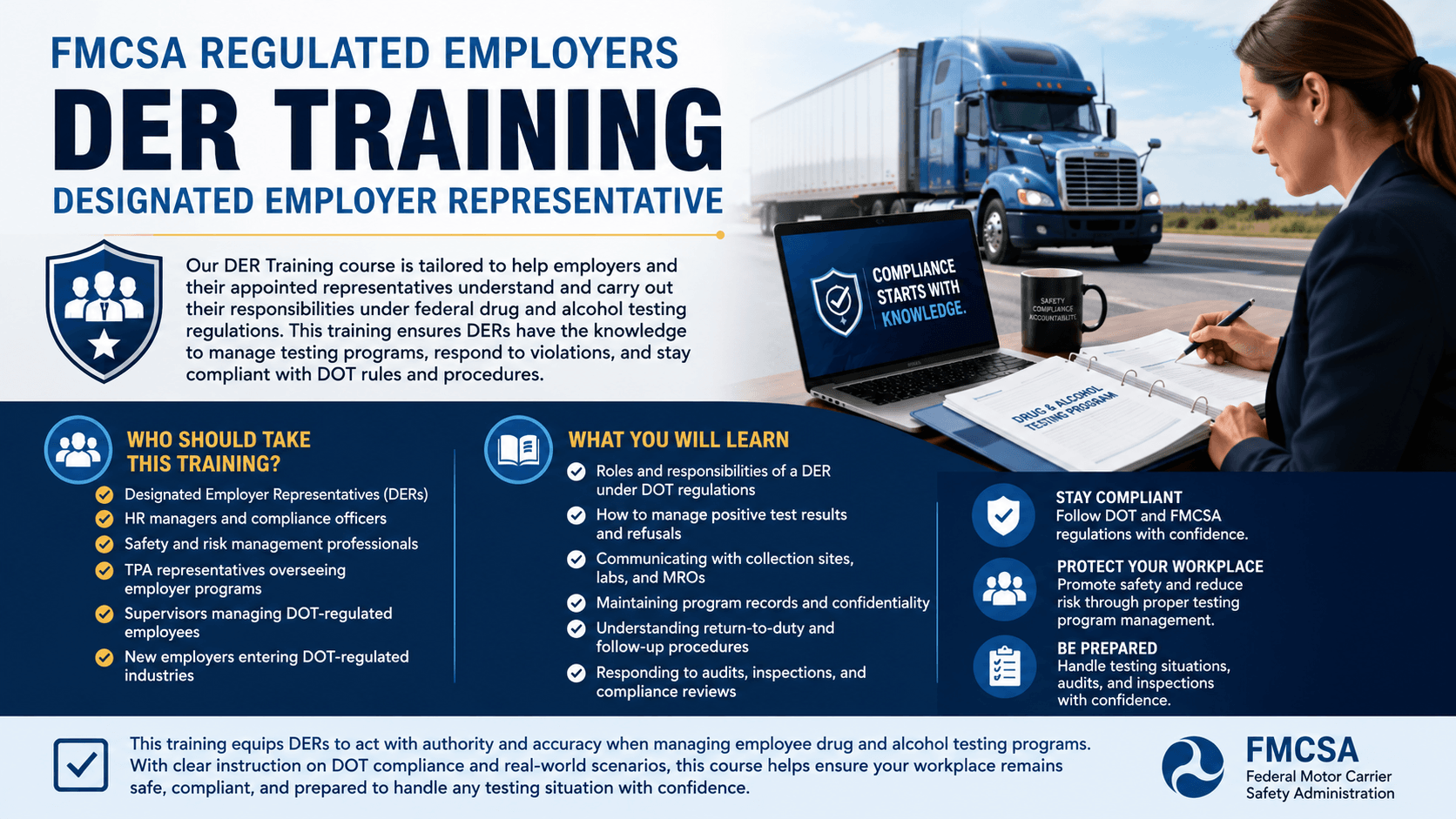
FMCSA DER Training (Designated Employer Representative) Our FMCSA Designated Employer Representative (DER) Training course is designed specifically for employers, managers, and compliance professionals responsible for administering drug and alcohol testing programs for safety-sensitive employees regulated under FMCSA regulations (49 CFR Part 382 and 49 CFR Part 40). As the DER, you serve as the employer's primary contact for all drug and alcohol testing matters and play a critical role in maintaining compliance with federal regulations. This training provides a practical understanding of DER responsibilities, including managing testing events, responding to positive test results and refusals, coordinating with collection sites, laboratories, Medical Review Officers (MROs), and ensuring proper documentation and recordkeeping. Participants will learn how to manage pre-employment, random, reasonable suspicion, post-accident, return-to-duty, and follow-up testing requirements while maintaining confidentiality and regulatory compliance. The course also covers FMCSA Clearinghouse requirements, audit preparation, record retention, and employer responsibilities when violations occur. Whether you are a new DER or an experienced compliance professional seeking a refresher, this course provides the knowledge and confidence needed to effectively oversee your company's FMCSA drug and alcohol testing program while protecting your organization from costly violations and compliance risks.
Hair Specimen Collector Training
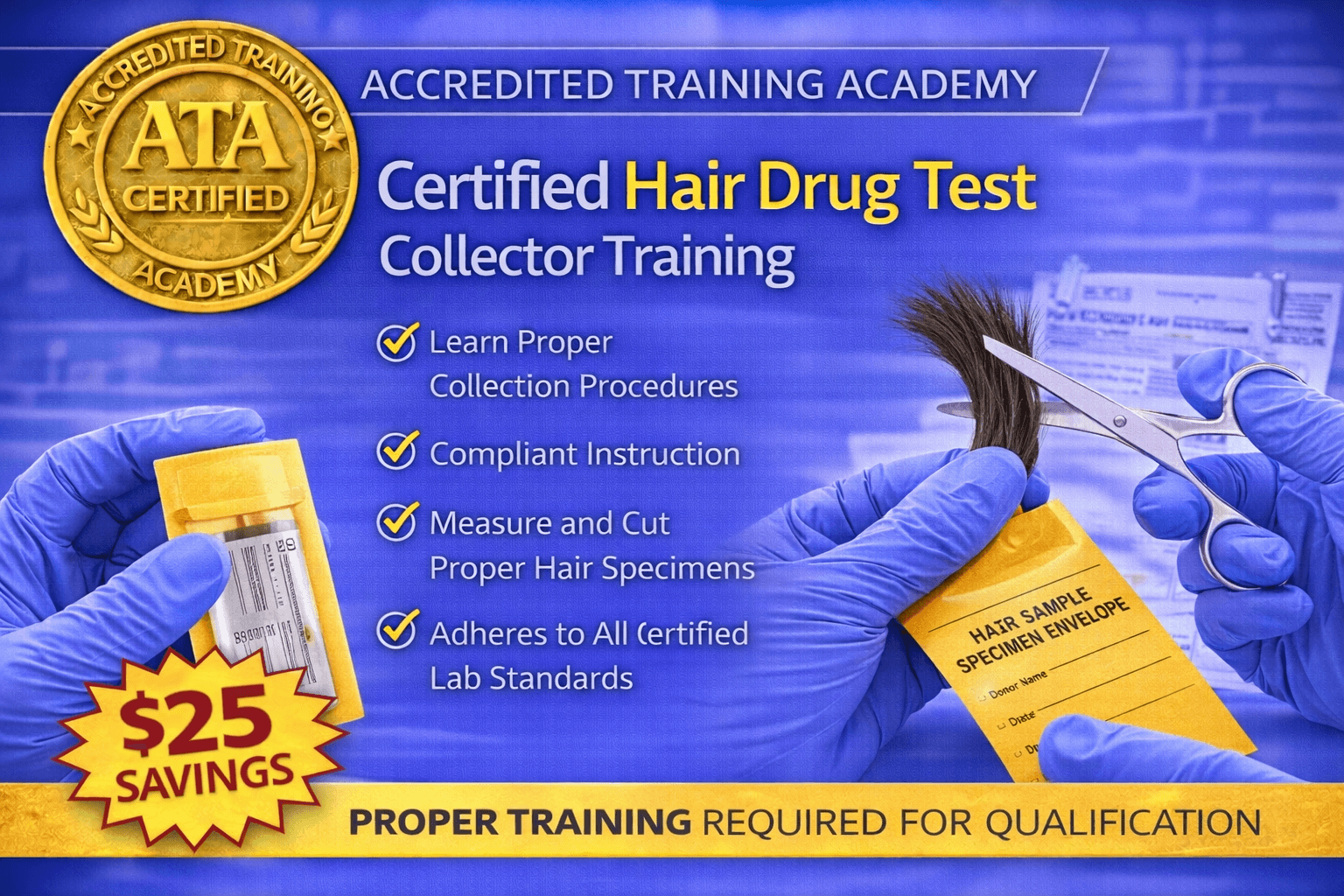
The Hair Specimen Collector Training Course provides comprehensive instruction and certification for individuals seeking to become qualified hair drug test collectors. This self-paced online training is designed to ensure collectors understand and perform hair specimen collections according to the highest standards of accuracy, professionalism, and legal defensibility. Through expert-led modules, trainees learn the science behind hair testing, proper collection techniques, chain-of-custody procedures, and compliance with laboratory and forensic toxicology standards established by the Society of Hair Testing (SoHT), ILAC-G19, and EWDTS guidelines. Participants will gain hands-on knowledge of: Hair specimen collection and preparation procedures Donor identification and consent protocols Chain-of-custody documentation and shipping requirements Avoiding contamination and maintaining specimen integrity Laboratory analysis overview and cutoff levels Common challenges and best practices in hair testing